
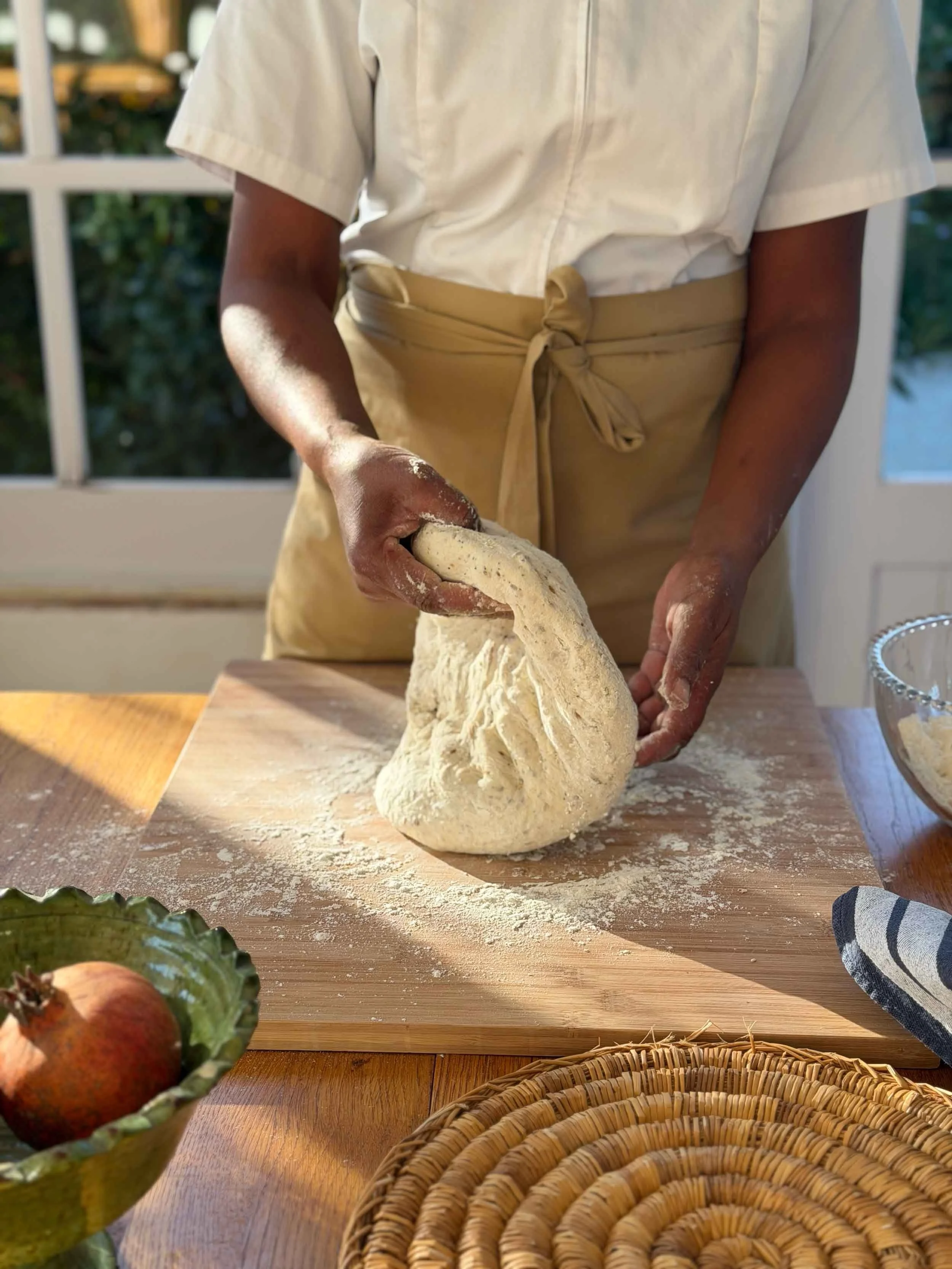
Villa Lage Kitchen: Our Seeded Bread Recipe
There are few things as comforting as the scent of warm bread drifting through the house.
There are few things as comforting as the scent of warm bread drifting through the house.
At Villa Lage, this simple ritual has become one of the quiet luxuries our guests love most. Our chef prepares it often, and the aroma fills the villa with that unmistakable feeling of home. Here we share our seeded loaf recipe, a favourite to enjoy warm, sliced on the kitchen counter, ideally accompanied by a glass of our exclusive wine from Quinta de Santar, Dão.
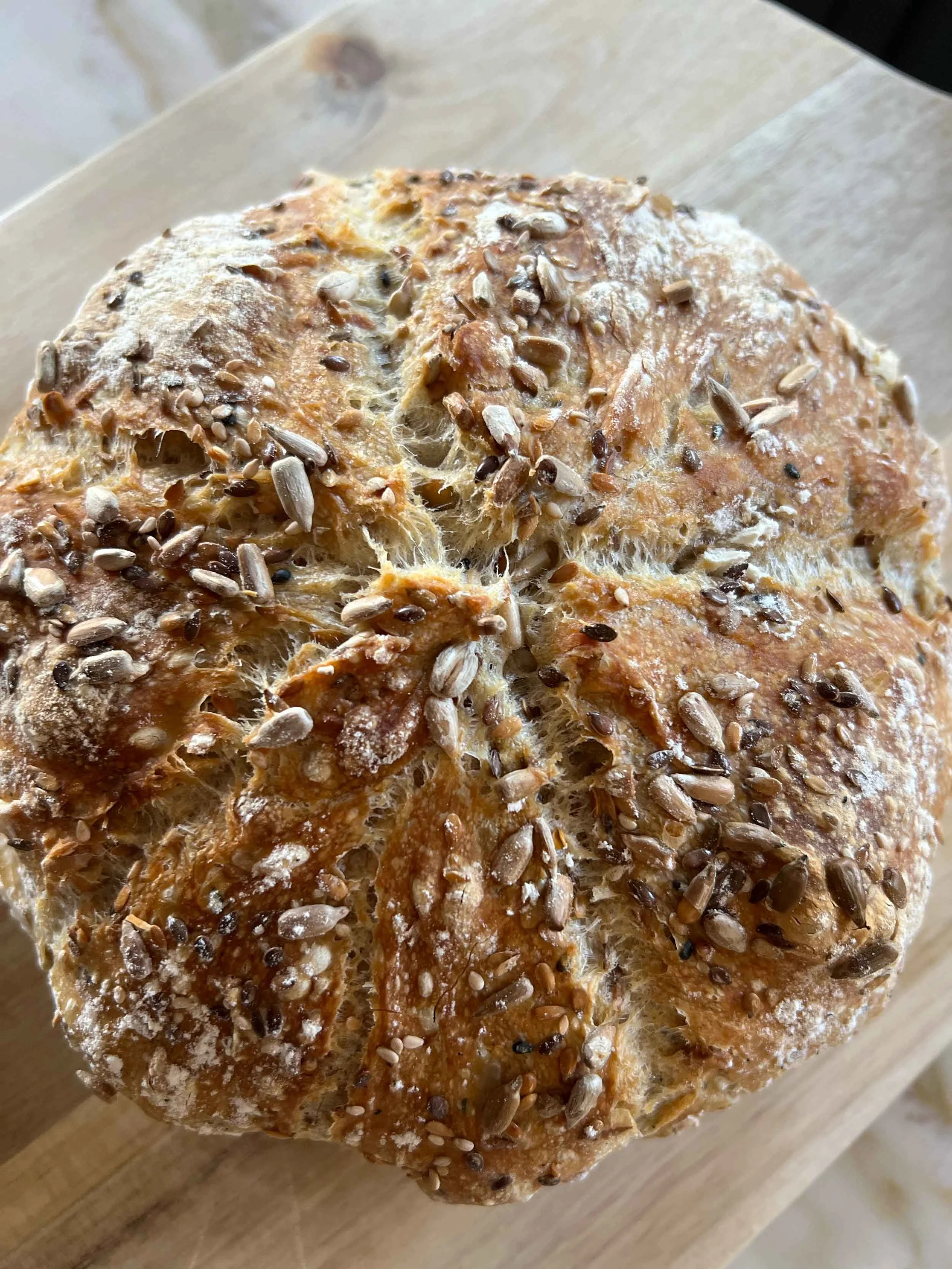
Villa Lage Seeded Bread – English Recipe
Ingredients:
400 g T65 wheat flour (or strong white bread flour)
1 g dry yeast
7 g salt
280 g warm water
40 g mixed seeds (golden flax, chia, sunflower, pumpkin)
Quick overview: Toast and hydrate the seeds. Mix with flour, water, yeast and salt. Let the dough rest and perform several folds. Ferment slowly, shape gently, roll in seeds, proof in a banneton, and bake in a preheated cast-iron pot at high heat for a crusty, aromatic loaf.
Method:
Toast the seeds in a dry pan over medium heat for about 5 minutes until they start to pop. Add 40 g of water and let them soak for 30 minutes.
Sift the flour into a bowl, keeping yeast and salt on opposite sides.
Add the hydrated seeds, then the warm water, and mix by hand until the dough comes together. Cover and rest for 30 minutes.
Perform three rounds of stretch-and-folds, every 30 minutes (1h30 total).
After the final fold, ferment for 2h30.
Turn the dough onto a floured counter, shape into a ball, and rest 15 minutes.
Optional: perform one or two extra folds (reducing final fermentation time accordingly).
Flatten the dough, fold it like a book, roll it tightly and place seam-side up in a floured banneton. Lightly mist the dough with water and roll its surface in seeds. Proof for 2 hours.
Preheat the oven to 250ºC with a cast-iron pot inside for 30 minutes.
Turn the dough onto baking paper, score the top, place it carefully into the hot pot, cover and bake for 20 minutes..
Uncover and bake for another 20 minutes.
Cool on a rack for at least 30 minutes before slicing.
If there is anything better than warm bread… It's warm bread with butter.
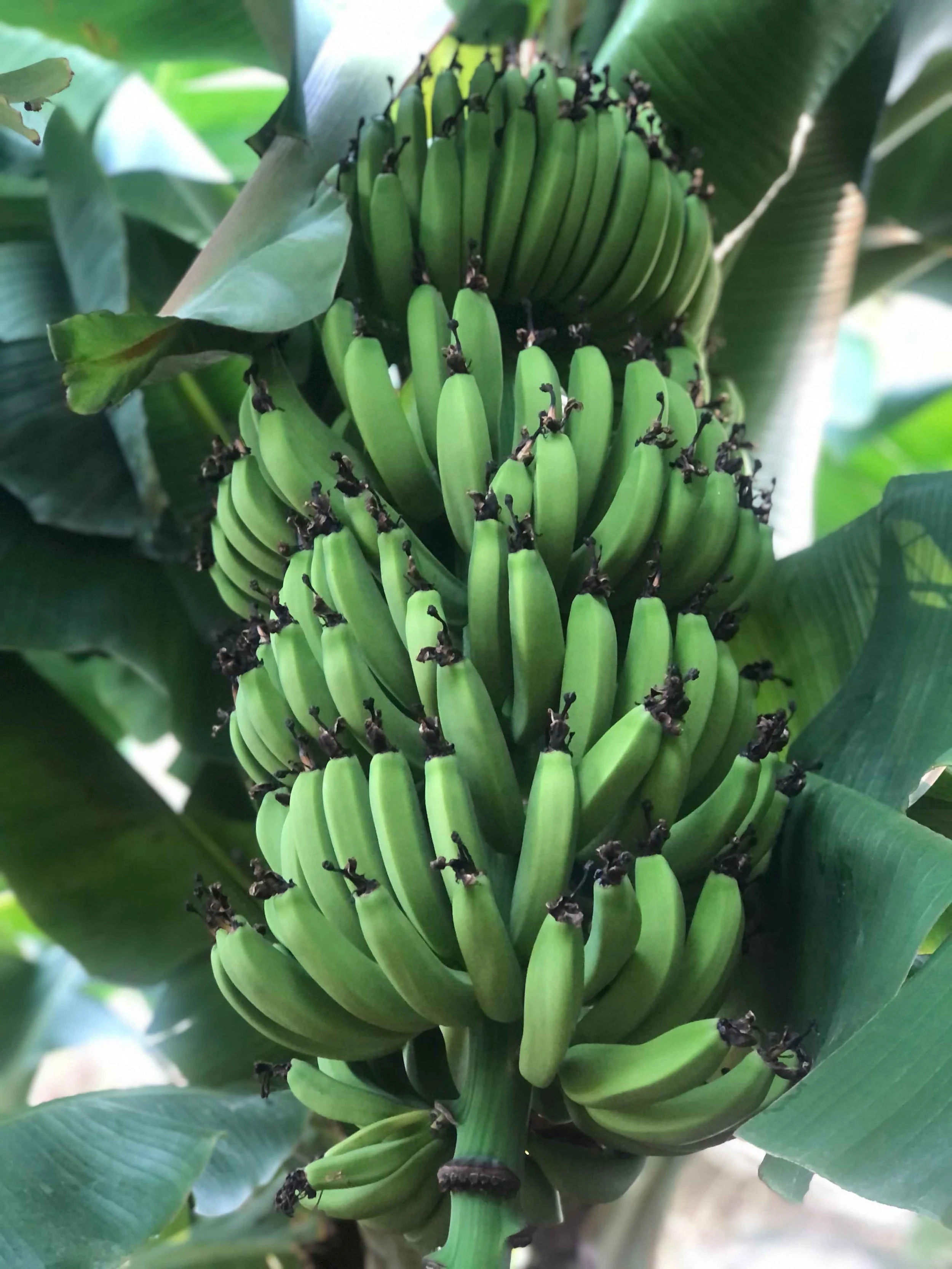
The Orchard of Flavours: A Living Edible Garden Shaping the Future of the Algarve
Just a short distance from Villa Lage, in Belmonte, lies one of the Algarve’s most inspiring ecological projects: The Orchard of Flavours – Pomar dos Sabores.
Just a short distance from Villa Lage, in Belmonte, lies one of the Algarve’s most inspiring ecological projects: The Orchard of Flavours – Pomar dos Sabores.
Created and managed as a non-profit botanical garden dedicated to edible plants, this remarkable project invites visitors to experience a new vision of Mediterranean agriculture — one rooted in science, resilience, and respect for nature.
An Edible Botanical Garden With Purpose
Accredited by Botanic Gardens Conservation International (BGCI) in 2022, The Orchard of Flavours is far more than a garden. It is a living laboratory, bringing together biodiversity conservation, climate adaptation, and regenerative agriculture.
More than 400 species of fruit trees and edible plants are carefully studied and documented, forming an extensive open-access database that benefits farmers, researchers, and visitors.
Two Ideas That Marked Our First Visit and inspired us
During our first encounter with the Orchard of Flavours, two concepts stood out as especially powerful — both simple, elegant and transformative.
1. The Power of Nitrogen-Fixing Plants
One of the Orchard’s most striking lessons is the intelligent use of nitrogen-fixing species.
These special plants — such as certain legumes, acacias and pioneer shrubs — naturally enrich the soil, reducing the need for fertilisers and creating a healthier, more self-sustaining ecosystem.
Walking through the orchard, you witness how these plants:
Improve soil fertility naturally
Support neighbouring fruit trees
Reduce dependency on external inputs
Create resilience in low-water, Mediterranean conditions
It is a beautifully orchestrated cooperation between species — a masterclass in working with nature rather than against it.
2. The Miyawaki Forest: A Pocket of Regeneration
Another unforgettable feature is the Miyawaki micro-forest, a dense planting technique that accelerates natural forest growth using native species.
In the Orchard of Flavours, the Miyawaki forest:
Creates shade and cools the surrounding land
Boosts biodiversity
Stores carbon
Demonstrates how degraded soils can recover quickly
Provides habitat for birds, insects and microorganisms
This miniature forest is living proof that regeneration can happen faster than we imagine when ecological intelligence guides the design.
These two principles — nitrogen-fixing plants and the Miyawaki forest — capture the essence of the Orchard: practical, hopeful, innovative solutions for a changing climate.
A Regenerative Vision for the Future
Throughout the site, visitors can observe:
Contour-based planting to harvest and hold rainwater
Deep mulching and permanent ground cover
A thriving Food Forest Lab
A pioneering Dry Orchard Experiment
Research plots testing climate-resilient fruit varieties
Every detail reflects a commitment to rebuilding landscapes for future generations.
Villa Lage’s Commitment to Water-Wise Gardening
At Villa Lage, we deeply resonate with the Orchard’s mission.
The Algarve faces growing water stress, and preserving this resource has guided our own landscape design.
Our gardens at Villa Lage were intentionally planted with:
Native and Mediterranean species that thrive with minimal water
Drought-tolerant shrubs, aromatic herbs and trees
Low-irrigation practices and soil-care techniques that protect water and promote resilience
A Visit That Inspires
For guests of Villa Lage, a visit to the Orchard of Flavours is a rare opportunity to walk inside a living experiment.
It is beautiful, educational and deeply inspiring.
Here, you feel the meeting point between:
Taste and ecology;
Science and tradition;
Local heritage and global sustainability.